Mattress and bed guide
Vispring Baronet Superb: What to Consider in a Traditional Bed
A traditional handcrafted bed invites a different kind of scrutiny. Its character is shaped not by a single headline feature but by the relationship between its support system, upholstery, materials, foundation and the sleeper’s own needs. The Vispring Baronet Superb is a model to investigate if you are drawn to this approach. The useful question is not simply whether it sounds luxurious, but whether its particular construction and feel make sense for the way you sleep.
Published October 18, 2026
Start with the bed you are actually evaluating
“Traditional bed” can describe a broad family of designs rather than one fixed recipe. A bed may combine a spring-based support system with layers of upholstery and a carefully finished cover, yet the materials, proportions and available comfort options can vary by model and configuration. Even within a named range, details may differ according to size, firmness selection or the foundation chosen. That is why broad claims about handmade construction or natural materials are a starting point, not a substitute for the specification of the exact Baronet Superb you are considering.
Begin by asking for a current, model-specific description. What is inside the mattress? Which layers provide support, and which add cushioning? What materials are used in the upholstery and cover? Is the mattress one-sided or designed to be turned? What foundation is recommended? These questions move the conversation from atmosphere to evidence. They also make it easier to compare the Baronet Superb with other beds without relying on labels such as “classic,” “luxury” or “natural,” which can mean different things from one manufacturer to another.
Product information can change over time, and retailers may describe the same model with different levels of detail. If a specification is unclear, ask the retailer to confirm it in writing and to identify whether the information applies to the exact size and configuration on offer. That simple step can prevent confusion about what is included, what is optional and what may be required to support the mattress properly.
Read construction as a system, not a list of materials
A mattress works as a layered system. The support core responds to body weight; upholstery layers alter how the surface feels; the cover influences the first impression of touch and may affect airflow and moisture management. The foundation beneath the mattress matters, too. It can influence how the mattress is supported and how the finished bed feels in use. Looking at any one component in isolation risks missing the way the parts interact.
When researching the Baronet Superb, ask what kind of spring arrangement it uses and how that arrangement is intended to support the body. Do not assume that the phrase “traditional construction” tells you everything about the spring design. Ask whether the spring system is divided into zones, whether the springs are individually responsive, or whether another arrangement is used. If a salesperson describes a technical feature, ask what it means in practical terms: how might it affect movement, pressure distribution or support at the edges?
Then turn to the upholstery. Natural fibers and other cushioning materials can contribute different qualities, but material names alone do not establish how a bed will feel. The amount, placement and combination of layers matter. A wool layer, for example, may be discussed in relation to cushioning or moisture handling, while cotton, hair or other fibers may have distinct roles in the build. The relevant question is not whether a material sounds appealing; it is where it appears in the mattress, how it is used and what the manufacturer says it contributes.
Ask for the full material description rather than a shorthand list. Find out whether the listed materials are used in the mattress itself, in the cover, or in the foundation. Clarify whether any synthetic components are present, and whether a statement such as “natural” refers to a particular layer or the complete product. Precise answers help you match your priorities—such as material transparency, temperature comfort or a particular surface feel—to the construction in front of you.
Firmness is a sensation, not a universal measurement
Firmness labels are useful only as a rough guide. One maker’s “medium” may feel different from another’s, and the same mattress can seem firmer or softer depending on a sleeper’s build, usual posture, the bed base and personal expectations. The Baronet Superb should therefore be assessed through direct experience whenever possible, with attention to how the whole body settles rather than how the top feels for a few seconds.
On a showroom trial, give yourself time to relax into your usual sleeping position. Notice whether your shoulders and hips feel comfortably accommodated, whether your lower back feels supported, and whether you are tempted to brace or shift to find relief. A mattress that feels pleasantly cushioned at first may not provide the balance you want over a full night; a surface that initially feels firm may become more comfortable as you settle. The test is personal, and a quick press of the hand is no replacement for lying down.
Ask which comfort options are available and whether they alter the upholstery, the support system or both. If a retailer uses terms such as “soft,” “firm” or “tension,” ask for an explanation of how those choices are defined for this model. Confirm whether different options are available across all mattress sizes and whether the selected configuration affects delivery time, return terms or warranty coverage.
It is also worth separating surface softness from underlying support. A bed can feel cushioned at the surface while still offering a stable base, or it can feel firm because the upper layers are relatively restrained. Neither sensation is automatically right or wrong. Your aim is to find a configuration that feels comfortable in your natural position and remains so as you move during the night.
Bring your sleep position into the comparison
Your customary position gives the mattress test a useful frame. Side sleepers often pay close attention to pressure at the shoulders and hips, while back sleepers may focus on whether the body feels evenly supported without an uncomfortable hollow or raised sensation. Stomach sleepers may prefer a surface that does not allow the midsection to sink in a way that feels strained. These are general considerations, not medical rules: individual bodies, habits and comfort preferences vary.
Try more than one position if you change positions during the night. Notice whether turning feels easy and whether the mattress follows your movements in a way you find comfortable. Some people value a more buoyant, responsive surface; others prefer a more enveloping sensation. The Baronet Superb’s construction may create a distinctive feel, but only a direct test can tell you whether that character suits your own sleep habits.
If you experience persistent pain, numbness or other symptoms, mattress research should not stand in for advice from a qualified health professional. A bed can influence comfort, but no model should be treated as a guaranteed remedy for a health condition. When comfort needs are complex, describe them to a clinician and use that guidance alongside a careful, practical mattress trial.
Account for a partner, not just a mattress
Two people sharing a bed may arrive with different definitions of comfort. One may prefer a softer surface; the other may want more firmness. Body size, sleep position, sensitivity to motion and temperature preferences can all shape the experience. If the Baronet Superb is being considered for a shared bed, both sleepers should test it when possible, rather than assuming one person’s response predicts the other’s.
During a trial, take turns moving, getting in and out, and settling into sleep positions. Notice whether one person’s movement is distracting to the other. Ask the retailer how the bed behaves across larger sizes and whether configuration choices can address differing preferences. Do not infer that a particular spring system guarantees motion isolation or eliminates disturbance; ask what is known about the specific model and verify it through your own experience.
Also consider practical matters: the room’s dimensions, the route to the bedroom, the bed frame and the combined weight of the mattress and foundation. A substantial traditional mattress may be harder to move or rotate than a lighter alternative. If the bed is going upstairs or into a compact space, confirm delivery access before purchase. A good sleep decision can be undone by a mattress that cannot be installed, maintained or handled comfortably in the home.
The foundation is part of the decision
A mattress is not evaluated in a vacuum. The base beneath it needs to be compatible with the manufacturer’s requirements, and its condition can affect how the mattress is supported. Ask whether the Baronet Superb is intended for a particular type of foundation and whether using another base could affect performance or warranty coverage. Check the required spacing, support points and weight limits rather than relying on a bed frame’s appearance.
If you already own a foundation, determine whether it is level, structurally sound and appropriate for the new mattress. A worn or unsuitable base may create uneven support, complicate the comfort test and potentially shorten the useful life of the bed. If a matching foundation is recommended, ask what distinguishes it and whether it is sold separately. Include its cost, dimensions and delivery requirements in your comparison.
Slatted frames deserve particular attention. The spacing and strength of the slats can matter, and requirements vary by manufacturer and mattress. Do not assume that a platform frame is suitable simply because it has supported another mattress. Request clear guidance for the exact model and size, then compare that guidance with the frame you plan to use.
Judge craftsmanship by details you can verify
Handcrafted language can suggest care and tradition, but it is most useful when connected to specific, verifiable details. Ask which production steps are performed by hand, what quality checks are applied and how the maker describes consistency between mattresses. A handcrafted process does not by itself tell you how long a mattress will last, whether its materials meet your preferences or whether its comfort will suit your body.
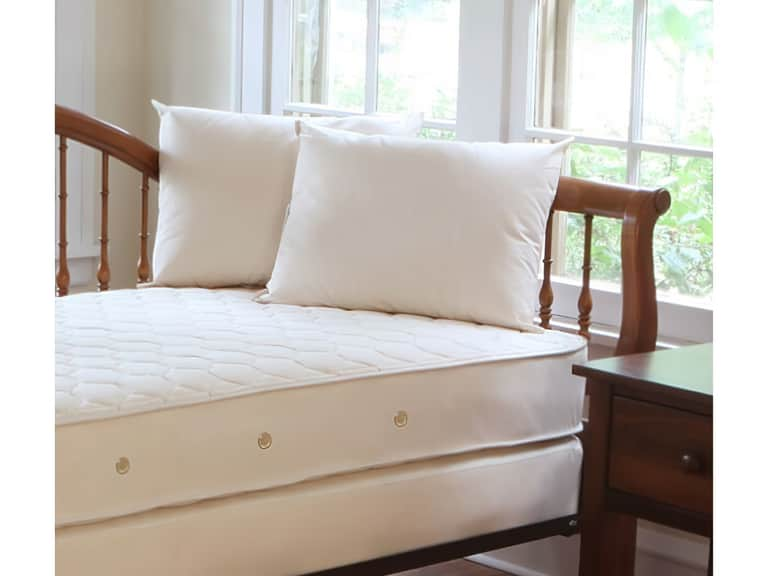
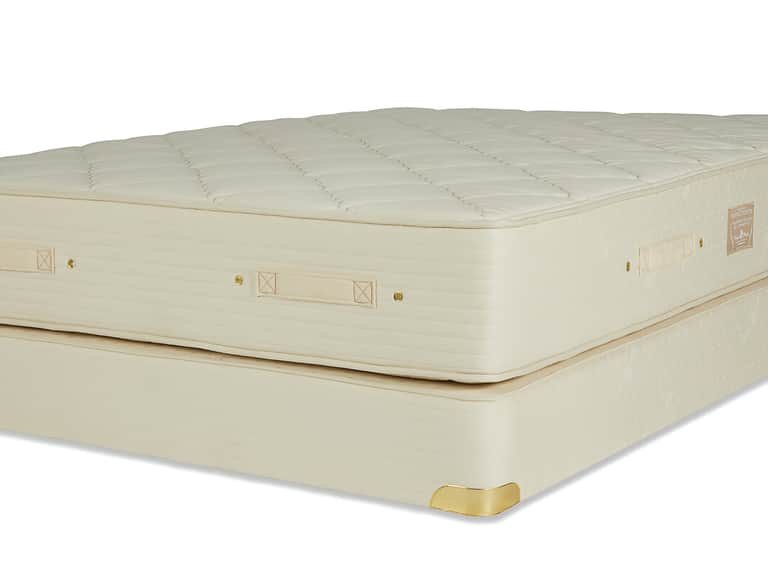
Inspect the finish: seams, quilting, handles, labels and overall shape. These details can reveal how carefully the mattress is assembled, but they should be considered alongside the written specification and the terms of purchase. Ask how the product should be rotated or turned, how often that is recommended and whether the construction makes those tasks practical. Maintenance instructions are part of ownership, not an afterthought.
Clarify what the warranty covers and what it excludes. A warranty may address manufacturing defects but not ordinary changes in feel, normal wear or damage from an unsuitable foundation. Ask how a concern is assessed, what documentation is required and who pays for transport or inspection. The length of a warranty is only one piece of the picture; the conditions and process matter just as much.
Understand temperature, care and everyday use
Sleep temperature depends on more than the mattress. Bedding, room climate, nightwear and individual physiology all play a part. Materials and construction can influence how warmth and moisture are managed, but descriptions such as “breathable” do not guarantee that every sleeper will feel cool. If temperature is a major concern, ask the retailer to explain the materials used at the surface and through the upholstery, and test the bed in a way that reflects your needs as closely as possible.
Ask whether the mattress should be rotated, turned or left in a fixed orientation. Some designs are built to be used on one side; others may have different care instructions. Follow the maker’s guidance instead of applying a general rule. Confirm which protective cover is suitable and whether it could alter the feel or affect the warranty. A well-fitting protector may help guard against spills and everyday wear, but it should not be assumed to be compatible without checking.
New mattresses can have a period of adjustment as sleepers become familiar with a different surface. Before buying, ask what the retailer’s comfort trial or exchange policy actually permits. Check the number of nights required, any fees, condition requirements and whether a returned mattress is collected or exchanged. A policy’s headline promise may omit important conditions; read the full terms before committing.
Compare the total proposition, not the prestige
A traditional bed can represent a significant investment, so compare it with alternatives in a disciplined way. Put the Baronet Superb beside mattresses with similar support goals, size, materials and service terms. Compare the full specification, including the foundation, delivery, removal of an old mattress, trial period and warranty. A lower price may come with different construction or less flexible service; a higher price is not, on its own, proof of better fit.
Consider how long you expect to keep the bed, how comfortable you are with its care requirements and whether the model’s construction aligns with your priorities. If provenance or material sourcing matters to you, ask for documentation rather than relying on broad marketing language. If a particular comfort choice is essential, verify that it is included in the written order. Good research is not about finding the most elaborate feature list. It is about understanding what you are buying and why it fits your circumstances.
Be alert to comparisons that use different sizes, configurations or foundations. Two prices may appear to describe the same product while including different components. Ask for an itemized quote and a copy of the exact specification. Keep records of the selected comfort option, delivery arrangements and any promises about care or exchange. These details make the purchase easier to evaluate later, when the showroom conversation has faded.
A practical checklist before you decide
Before placing an order for the Vispring Baronet Superb, use a short checklist to turn impressions into a decision:
- Confirm the current construction and material specification for the exact size and configuration.
- Ask what the available comfort options mean and how they affect the feel of the bed.
- Test the mattress in your usual sleep positions, ideally with your partner if you share the bed.
- Verify foundation compatibility, frame requirements and any effect on warranty coverage.
- Review delivery access, installation, old-mattress removal and total cost.
- Read the full trial, exchange and warranty terms before buying.
- Confirm care instructions, including whether the mattress should be rotated or turned.
- Get the chosen specification and purchase terms in writing.
These questions are not obstacles to the purchase. They are the means of making it a more informed one. If a retailer cannot answer a construction or compatibility question, ask them to check with the manufacturer rather than settling for guesswork. For a bed built around layers and a particular support system, accuracy matters.
The decision is personal—and testable
The Vispring Baronet Superb may be worth exploring if you value a traditional approach to bed construction and want to understand how its support and comfort layers work together. Its name alone, however, cannot determine whether it belongs in your bedroom. That depends on the model’s current specification, the selected configuration, a compatible foundation and the way your own body responds.
Approach the research with curiosity rather than assumptions. Ask for exact details, test the mattress patiently, and compare it with alternatives on the same terms. Pay attention to comfort in your normal positions, practical fit in your home and the rules that govern care and returns. The right bed is not necessarily the one with the grandest description. It is the one whose construction, feel and ownership requirements make sense for the people who will sleep on it.